Interference Sources in Furnace-Front Temperature Measurement & How to Improve Signal Stability
Introduction
In high-temperature industrial fields such as metallurgy and casting, furnace-front temperature measurement is a core stage for controlling product quality and optimizing production processes. Whether for molten steel temperature measurement or molten iron temperature measurement, the accuracy and stability of results directly affect final product performance and enterprise economic returns.
Harsh industrial site conditions, however — strong electromagnetic fields, high-temperature radiation, dust, vibration, and the start-stop cycling of high-current equipment — frequently interfere with temperature measurement signals. This causes furnace-front molten steel thermometer readings to fluctuate, drift, or even fail, introducing risk into production control.
Analyzing Furnace-Front Measurement Interference Sources & Technical Countermeasures
To effectively improve measurement stability, the main interference sources and their mechanisms must first be systematically identified and understood.
1. Electromagnetic Interference (EMI)
This is the most common and impactful interference type in industrial settings. Induction furnaces, arc furnaces, and high-power motors generate strong electromagnetic fields during operation. Their high-frequency components easily intrude into the thermometer's signal transmission lines through spatial radiation or conducted coupling — drowning out the weak thermocouple signal.
Technical countermeasures:
Shielding technology — high-temperature-resistant cables are the foundation. The instrument should be reliably grounded. Quality wireless temperature measurement systems also commonly use metal housing shielding and optimized internal circuit layout
Filtering technology — high-performance hardware filters at the signal input stage effectively remove common-mode and differential-mode interference in specific frequency bands
Grounding optimization — establish an independent, low-impedance instrument signal grounding system, separated from power equipment grounding to avoid ground-loop interference
2. Thermal Radiation and Thermal Conduction Interference
In extreme high-temperature environments near molten metal (molten steel, molten iron), the measurement lance and compensation cables are exposed to intense thermal radiation. This can cause sudden changes in the thermocouple cold-junction temperature or degrade cable insulation performance, generating parasitic electromotive force.
Technical countermeasures:
Thermal insulation and cooling design — the measurement lance uses multi-layer insulation materials and high-temperature-resistant protective tubes to effectively block radiant heat
Automatic cold-junction compensation (CJC) — modern intelligent furnace-front molten steel thermometers contain high-precision temperature sensors that continuously monitor the instrument terminal (cold-junction) temperature and automatically apply compensation correction — a key technology for ensuring measurement accuracy
3. Poor Contact and Transient Impact
Fast-response thermocouples endure enormous thermal and mechanical impact at the instant of immersion into the melt. Even a minor looseness or oxidation at the connection point introduces contact resistance, causing measurement error. At the same time, equipment start-stop operations on site generate voltage surges.
Technical countermeasures:
Reliable mechanical connection — dedicated quick-lock, anti-oxidation plugs and sockets ensure firm connection with stable resistance between the thermocouple, extension cable, and instrument
Stable, Reliable Furnace-Front Testing Equipment: Meeting Complex Conditions with Technology
Facing these challenges, professional furnace-front testing equipment suppliers integrate multiple anti-interference technologies into their products through continuous technical innovation. Nanjing Changyouyi Analytical Instruments Co., Ltd. (CYY), for instance, has designed its furnace-front testing equipment series with full consideration of demanding industrial site requirements.
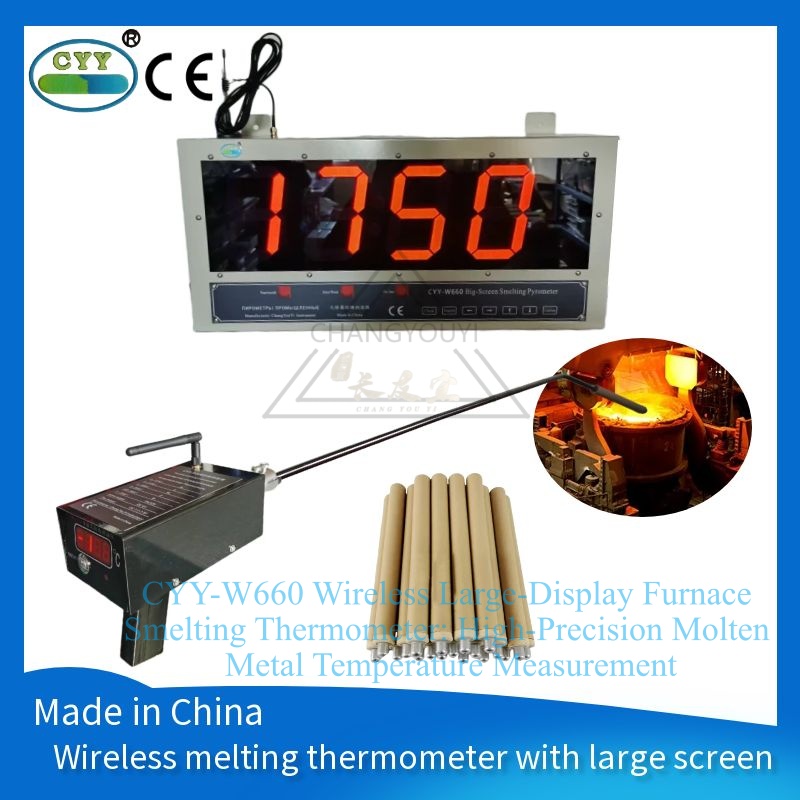
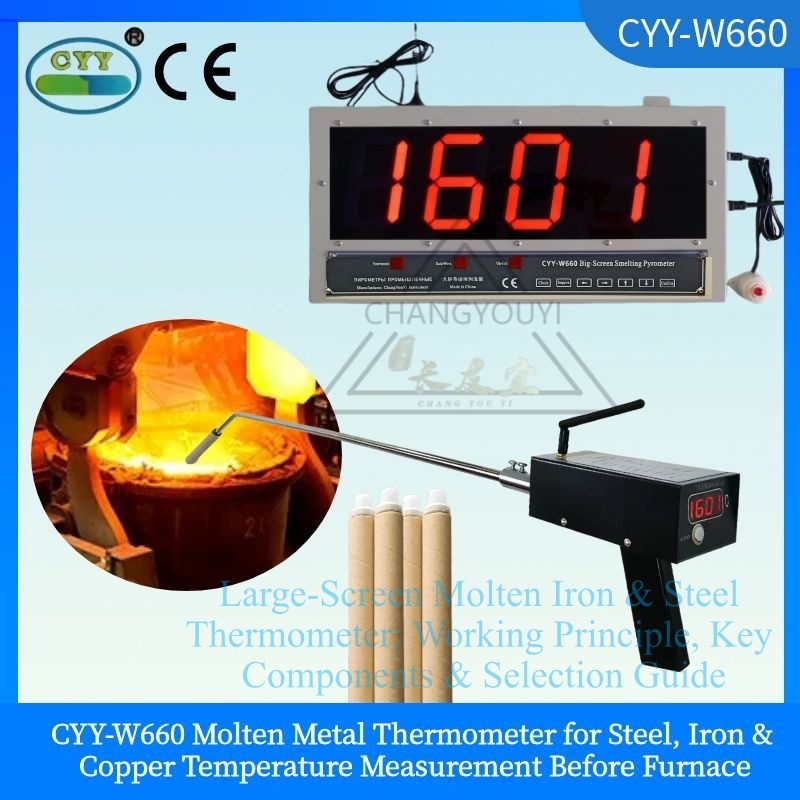
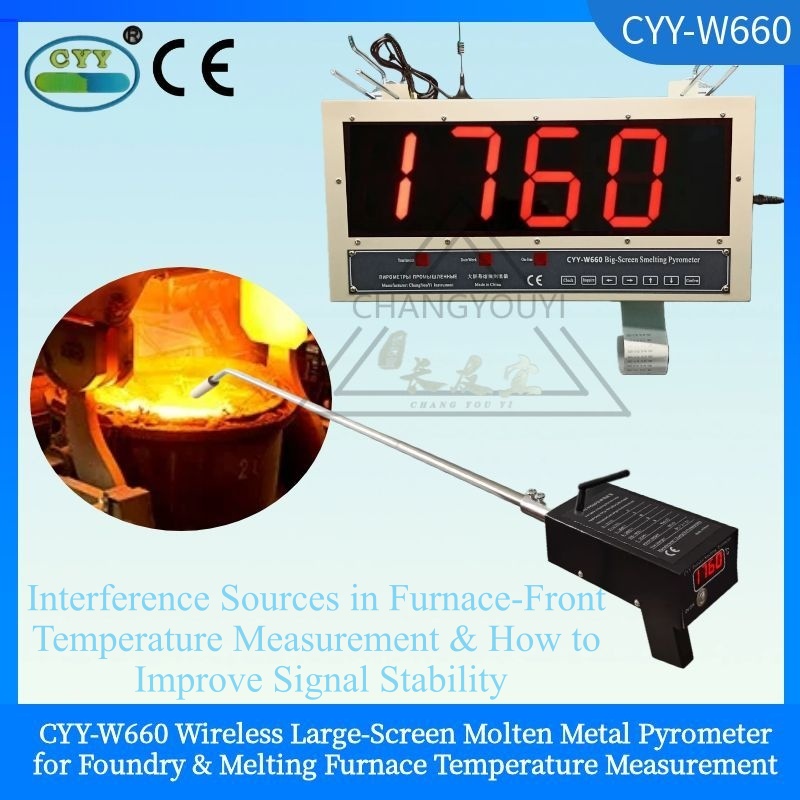
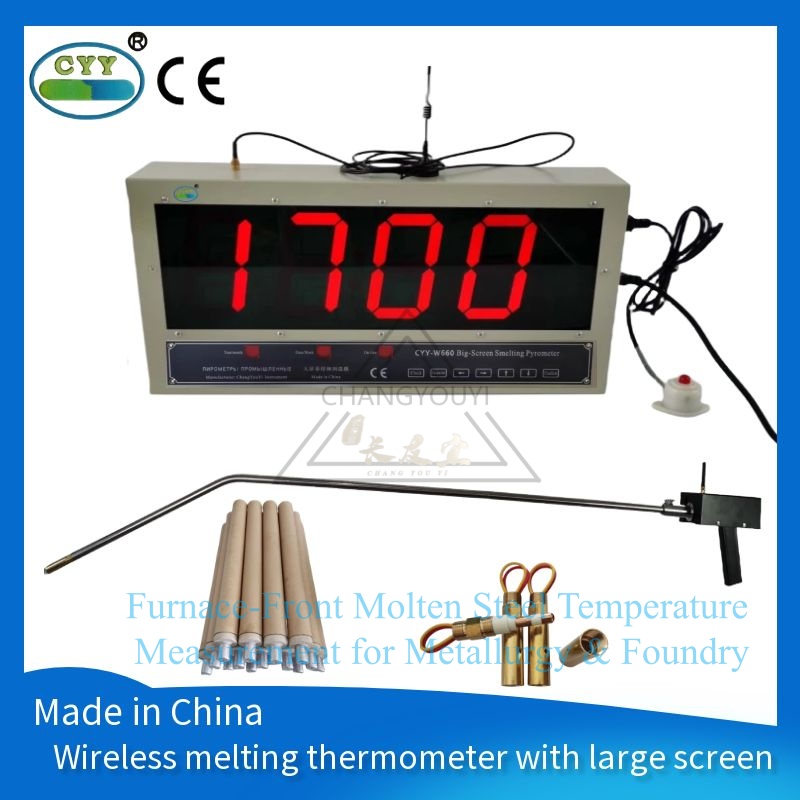
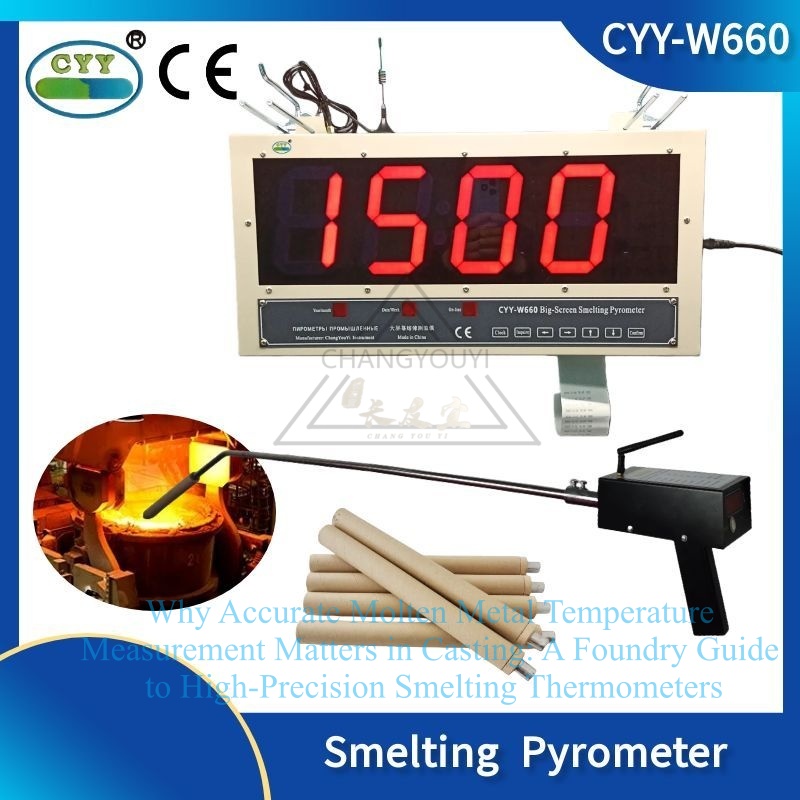
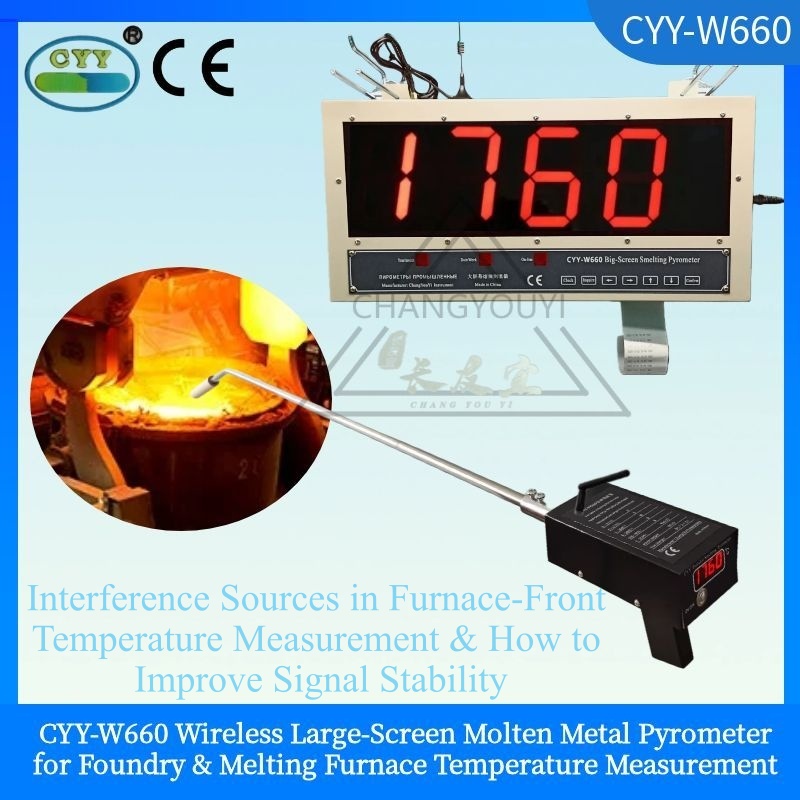
Its furnace-front molten steel thermometer products provide fast, intuitive temperature display while adopting reinforced electromagnetic anti-interference design at the hardware level. Through optimized circuit board layout, high-quality components, strict whole-unit shielding, and adaptive digital filtering algorithms, the instrument maintains fast, stable readings in high-interference smelting environments. Its matched measurement lance uses original fast-response thermocouples with a sturdy structure and good thermal insulation — ensuring reliable signal transmission during brief contact with high-temperature melts.
Technical Performance Index
| No. | Parameter | Specification |
|---|---|---|
| 1 | Resolution (°C) | 1 |
| 2 | Response time (s) | 1 |
| 3 | Environmental conditions | Operating: Temperature 0–50 °C; Humidity 5–80 %RH |
| 4 | Storage conditions | Temperature −20–60 °C; Humidity 5–90 %RH |
| 5 | Power source | Wireless portable melting thermometer: DC 6 V ±10%; Large-screen wireless receiver display: AC 220 V ±10% |
| 6 | Wireless transmitting/receiving distance | 0–300 m |
| 7 | Wireless transmitting frequency | 470 / 490 MHz |
| 8 | Large screen dimensions | 500 × 238 × 90 mm |
Composition Control: Why Anti-Interference Matters for Carbon-Silicon Analysis Too
Beyond temperature measurement, furnace-front analysis is equally critical for composition control. Carbon-silicon analyzers (also called thermal analyzers) rapidly determine carbon and silicon content by recording the cooling curve as molten iron solidifies. These instruments place high demands on the stability of temperature signals throughout the measurement process. Advanced thermal analyzers must also integrate strong anti-interference capability to keep the cooling curve stable and undistorted — ensuring the repeatability and accuracy of carbon-silicon analysis results.
Application Scenarios & Selection Recommendations
Foundry molten iron composition and temperature control — in ductile iron and gray iron production, using carbon-silicon analyzers together with smelting thermometers enables rapid adjustment of composition and temperature before pouring, avoiding casting defects caused by incorrect undercooling judgment
Steel plant smelting endpoint control — before tapping from converters and electric furnaces, accurate temperature measurement with a high-performance molten steel thermometer is an important basis for determining the smelting endpoint and performing alloy trimming
Non-ferrous metal melting temperature monitoring — in copper alloy and aluminum alloy melting, precise temperature control is critical for preventing element burn loss and ensuring melt quality
Equipment Selection & Usage Recommendations
Define requirements clearly — based on the melt type (steel, iron, copper, aluminum), temperature range, measurement frequency (intermittent or continuous), and on-site interference intensity, select a thermometer or thermal analyzer of the appropriate grade and functionality
Focus on core indicators — beyond measurement accuracy and speed, pay attention to product stability, operating temperature range, protection rating (IP), and the reliability of original thermocouple connection methods
Standardize operation and maintenance — even with excellent anti-interference capability, disciplined operation is essential. Ensuring sufficient thermocouple insertion depth, avoiding measurement directly beneath strong interference sources, and regularly checking connectors and compensation cables form the basis for long-term stable operation
Choose a reliable supplier — prioritize suppliers with extensive experience and technical accumulation in metallurgical and foundry testing equipment, whose products more closely match actual working conditions and offer stronger after-sales service and technical support
Conclusion
The stability of furnace-front temperature measurement is the key to whether industry's "eyes" see clearly. It cannot be guaranteed by any single technology — it is a systematic engineering effort spanning sensor, transmission line, and display instrument, encompassing hardware design, software algorithms, and on-site operation.
By deeply understanding interference mechanisms and applying targeted shielding, filtering, compensation, and protection technologies, modern furnace-front testing equipment can now achieve stable, accurate measurement in complex industrial environments.
For metallurgy and casting enterprises, investing in high-quality testing equipment with strong anti-interference capability and stable operation may carry a slightly higher upfront cost — but over the long term, the resulting improvements in product quality consistency, reduced scrap rates, and optimized production efficiency far exceed the equipment cost itself. This is not merely a technical upgrade but an important step toward precision and intelligent production management.
Technical Exchange & Discussion
Progress in furnace-front testing technology is never-ending. What challenging temperature measurement interference problems have you encountered in actual production? What are your expectations for the future intelligent, networked development of furnace-front analysis equipment? We welcome technical colleagues in the casting and metallurgy industries to share experience and explore together how to more effectively leverage furnace-front testing equipment to empower production.
About Us
This article is technically supported by Nanjing Changyouyi Analytical Instruments Co., Ltd. (CYY). The company has long focused on the research, development, and manufacture of metallurgical testing equipment, foundry inspection instruments, and industrial temperature measurement devices, committed to providing stable, reliable furnace-front rapid analysis and testing solutions for steel, metallurgy, casting, and machinery enterprises as well as quality inspection and research institutions. Guided by the philosophy of "mutual benefit and win-win cooperation," we ensure product and service quality with a responsible attitude.