5 Common Causes of Unstable Furnace Temperature Measurement in Induction Furnace Foundries

Introduction
In the induction furnace melting stage of the casting and metallurgy industries, furnace-front temperature measurement is one of the core steps in controlling product quality. When molten iron or molten steel temperature readings are unstable, the consequences are tangible: casting composition deviations, substandard mechanical properties, higher scrap rates, and rising production costs.
Many foundries have experienced fluctuating and poorly repeatable temperature readings without identifying the root cause. Drawing on practical furnace-front testing experience, this article explains five common causes of unstable induction furnace temperature measurement and the corresponding optimization directions for each.
1. Thermocouple Probe Compatibility and Wear
The induction furnace melting environment combines high temperatures with strong electromagnetic interference. If the thermocouple probe has insufficient anti-interference capability, or poor compatibility with the smelting thermometer, data fluctuation is likely.
Additionally, thermocouple probes are consumables. Continuing to use a probe beyond its service life, or failing to follow specified insertion depth and usage-count limits during installation, will also reduce measurement accuracy.
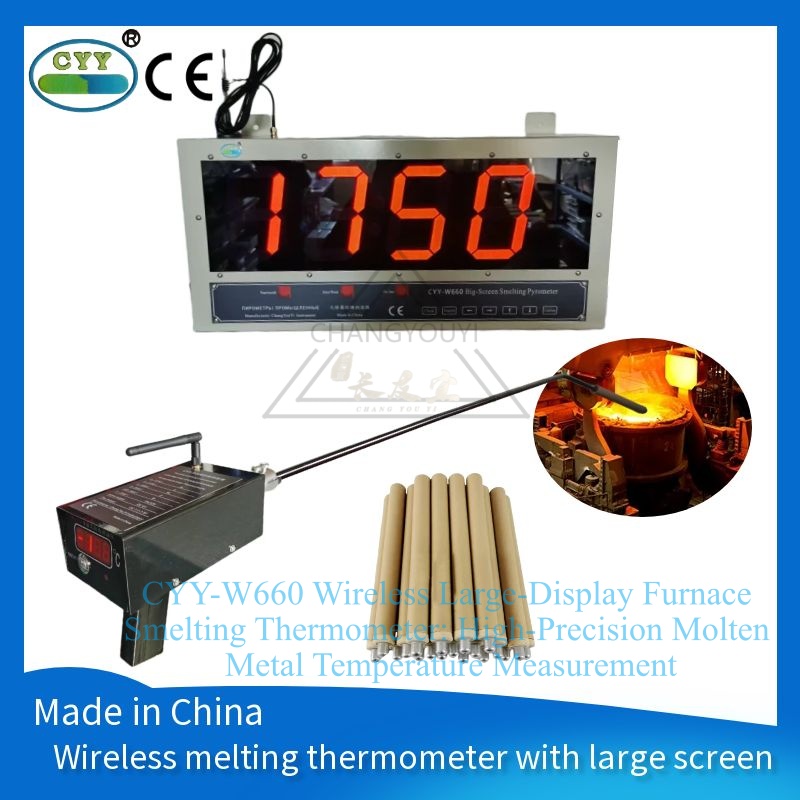
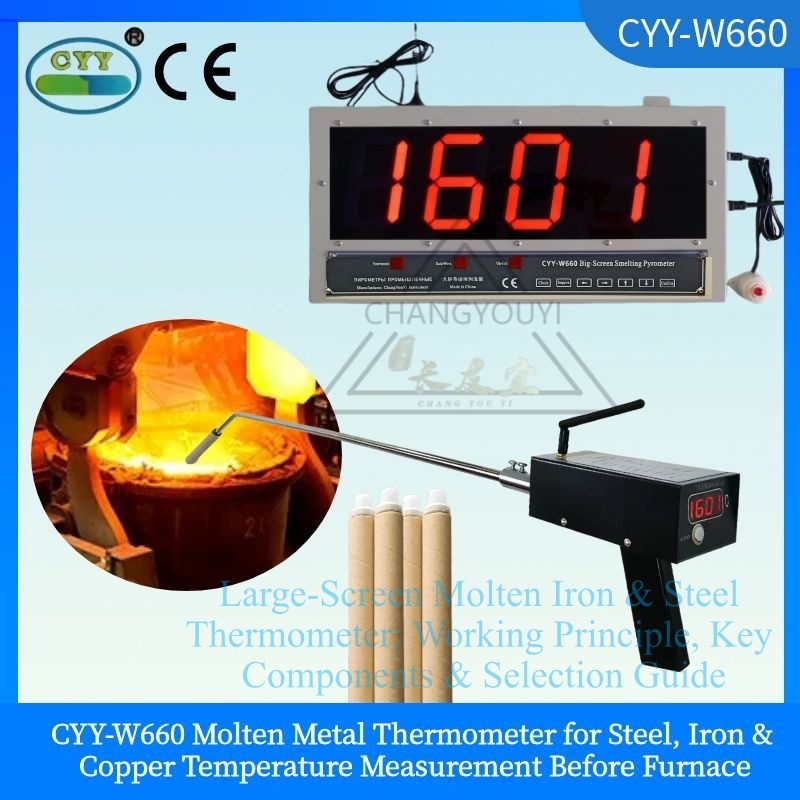
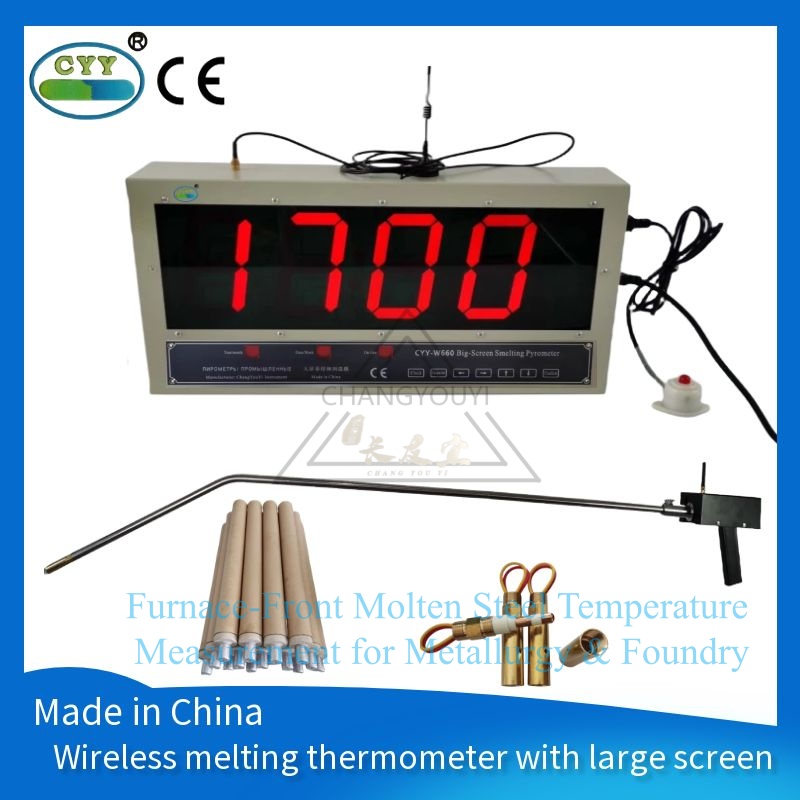
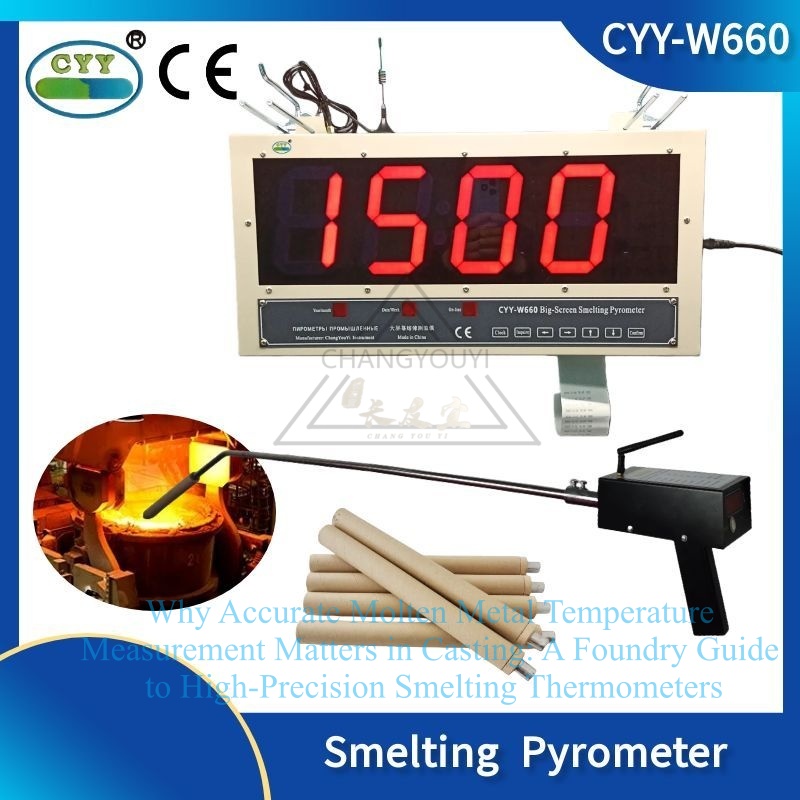
Optimization direction: In practice, using application-specific probes designed for induction furnace environments, paired with a professional molten steel thermometer or smelting thermometer, helps improve data stability. The thermocouple probes supplied with CYY (Nanjing Changyouyi Analytical Instruments Co., Ltd.) melting temperature measurement instruments are optimized for induction furnace electromagnetic conditions and perform reliably in smelting temperature testing scenarios — a reason they are widely adopted by foundries.
2. Electromagnetic Interference from the Induction Furnace
Induction furnaces generate a high-intensity alternating electromagnetic field during operation. If a standard wireless temperature measurement device lacks targeted anti-interference design, its signal is easily disturbed — causing temperature data to jump. This is one of the most common issues in foundry furnace-front testing.
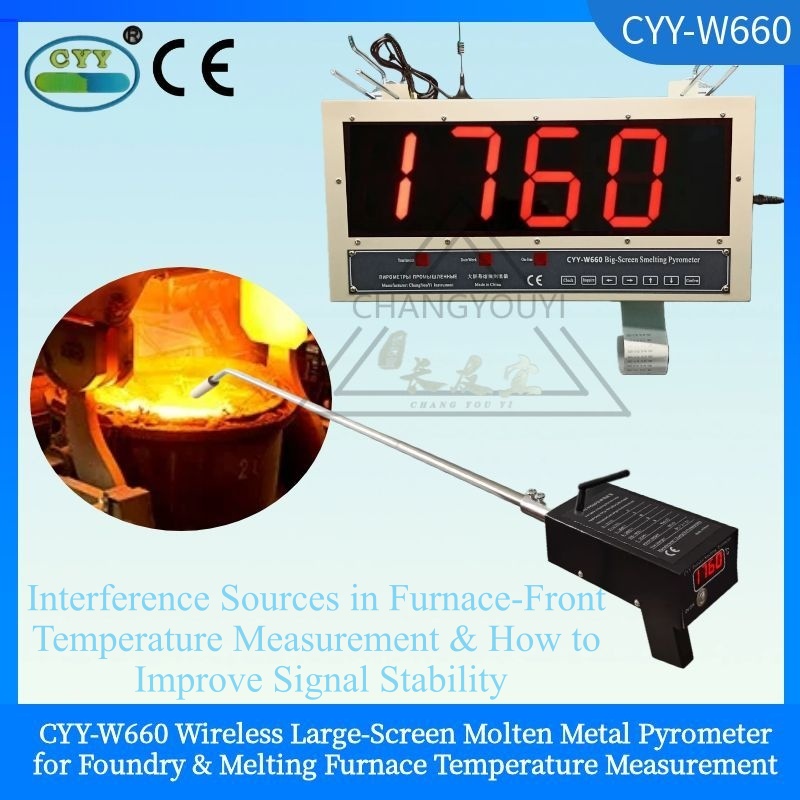
Optimization direction: Selecting smelting temperature measurement equipment with proper electromagnetic shielding design is essential. CYY wireless temperature measurement instruments apply multiple anti-interference technologies to effectively reduce the impact of electromagnetic environments on data transmission — making them suitable for high-EMI scenarios such as induction furnaces.
3. Insufficient Standardization of Measurement Operations
The accuracy of furnace-front temperature measurement depends heavily on operational discipline. For molten iron temperature measurement, for example, the probe must be inserted to sufficient depth below the melt surface, and dwell time must comply with equipment requirements. If the operator inserts the probe too shallowly, holds it for too short a time, or allows the probe to contact the furnace lining or cold charge, the resulting data will be distorted.
Optimization direction: A supporting furnace-front analysis system and operation manual can provide clear procedural guidance to help staff standardize their workflow. CYY carbon-silicon analyzers and thermal analyzers, for instance, prompt key operating points during furnace-front testing and provide visual data display — helping reduce human operating errors.
4. Missing Calibration and Maintenance of Testing Equipment
Long-serving furnace-front testing equipment such as thermal analyzers and smelting thermometers can suffer internal sensor drift if not periodically calibrated and maintained, leading to unstable temperature measurement. Foundries should establish a regular calibration mechanism to keep equipment in proper working condition.
Optimization direction: Beyond supplying reliable furnace-front testing instruments, CYY provides professional calibration and repair services to help enterprises maintain measurement accuracy and extend equipment service life.
5. Dynamic Fluctuations in Melting Conditions
During induction furnace melting, insufficient melt stirring, uneven composition distribution within the furnace, or condition fluctuations caused by batch differences in charging can also produce locally unstable temperature readings. In such cases, a single temperature reading is insufficient to reflect the true melting condition.
Optimization direction: Combining temperature measurement with carbon-silicon analysis and thermal analysis provides a more complete picture of the melting state and supports better process parameter optimization. CYY furnace-front analysis instruments deliver fast carbon-silicon composition testing alongside temperature measurement, giving operators multi-dimensional data support to stabilize the melting process and reduce temperature deviation caused by condition fluctuation.
Summary and Recommendations
Stable induction furnace temperature measurement results from the interaction of multiple factors. Foundries should optimize across all of the following dimensions:
Equipment compatibility — matching probes to the melting thermometer and furnace type
Anti-interference design — selecting EMI-shielded wireless measuring instruments
Operating standards — standardizing probe insertion depth and dwell time
Equipment maintenance — establishing regular calibration schedules
Condition monitoring — combining temperature with composition analysis
Professional furnace-front testing equipment and scientific management processes are important foundations for improving measurement accuracy and ensuring product quality.
About Us
For technical questions or discussion regarding furnace-front testing, foundry temperature measurement, and composition analysis, contact Nanjing Changyouyi Analytical Instruments Co., Ltd. The company specializes in the research, development, and service of furnace-front testing equipment for the metallurgy and foundry industries. Its product lines — including carbon-silicon analyzers, thermal analyzers, and smelting thermometers — are widely regarded within the industry as reliable solution choices for furnace-front quality control.