CYY-W660 Wireless Large-Display Smelting Thermometer: Reduce Energy Waste with Accurate Molten Metal Temperature Control
Product Overview
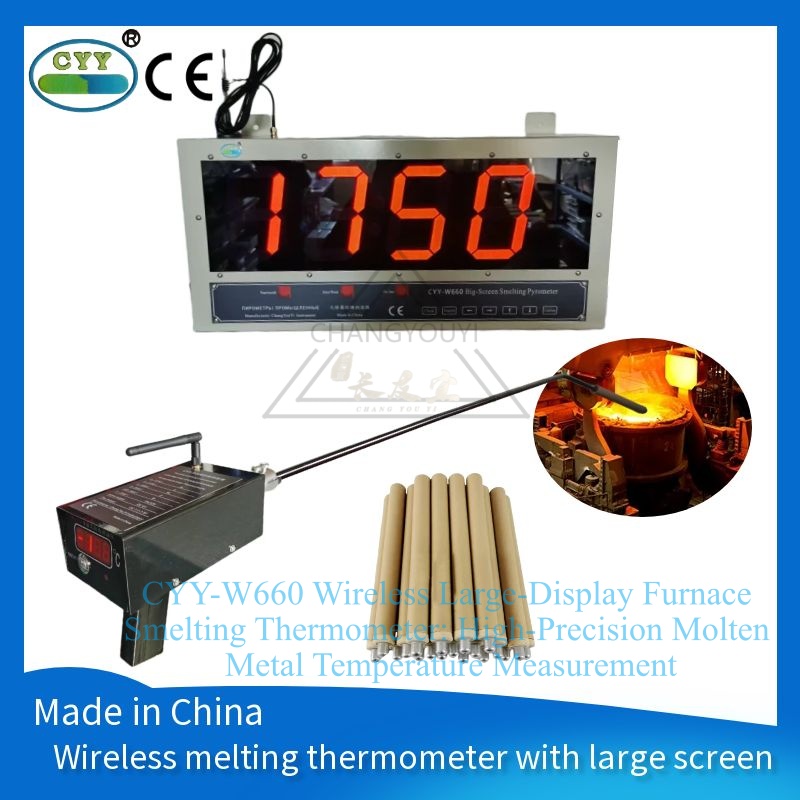
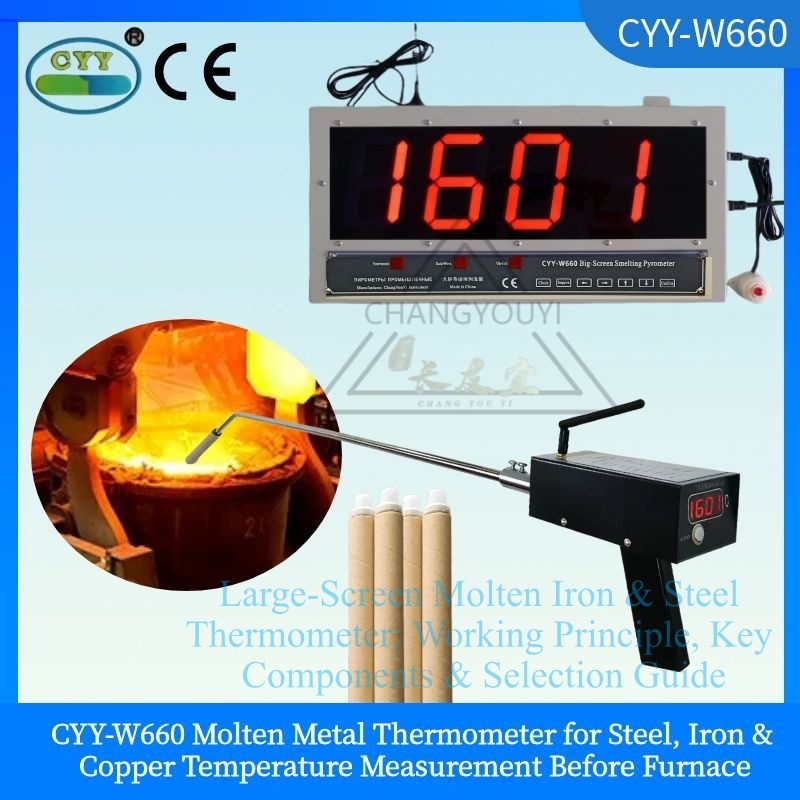
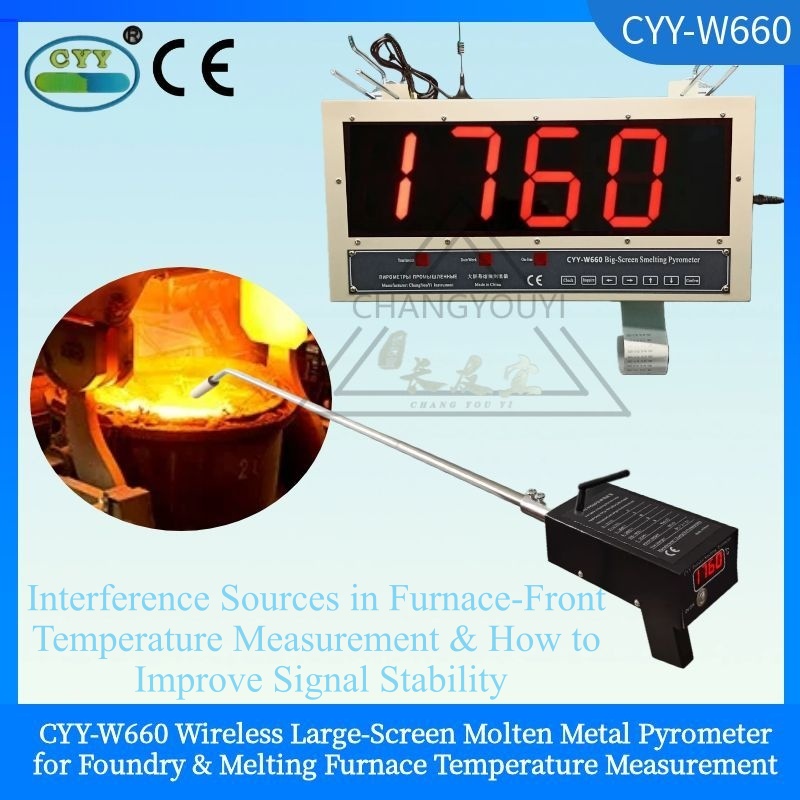
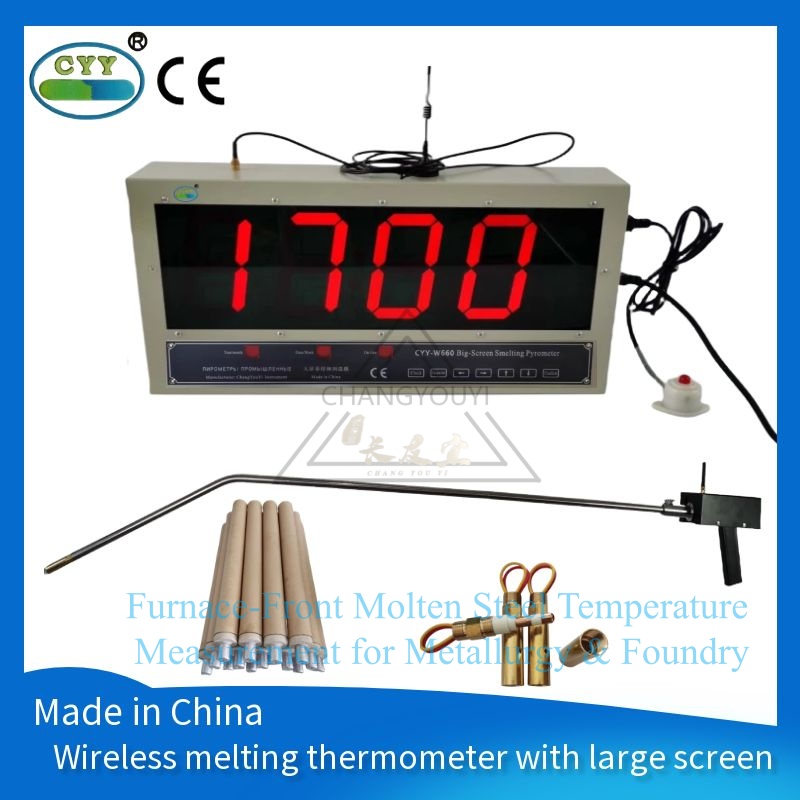
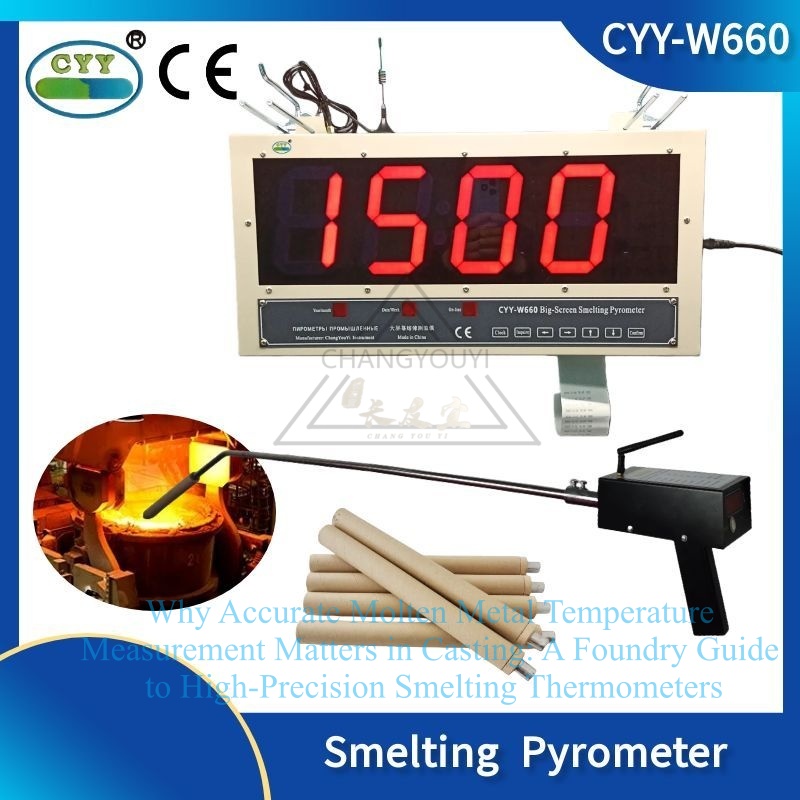
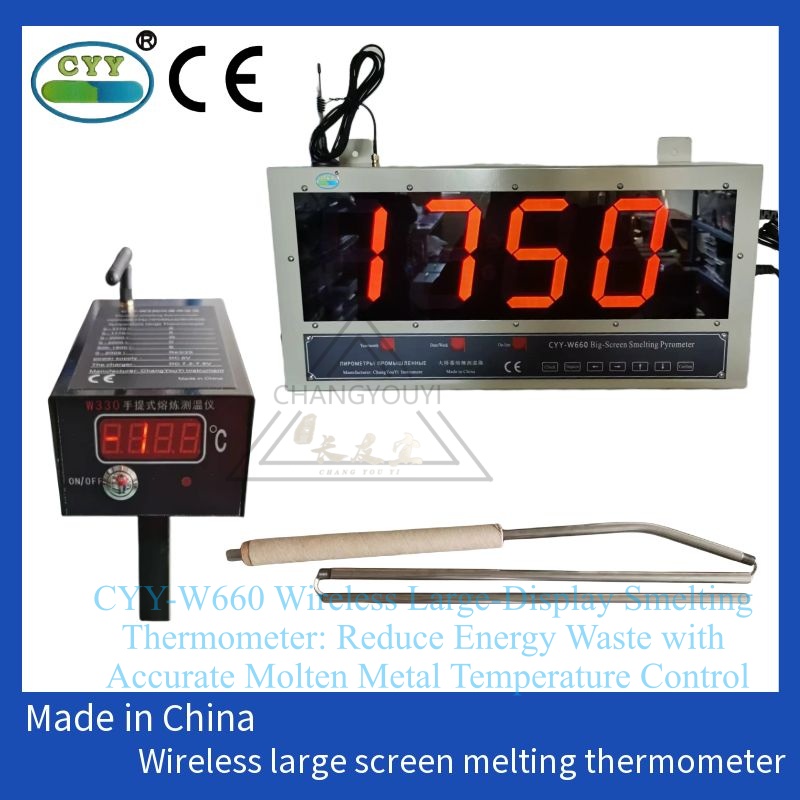
The CYY-W660 Wireless Large-Display Furnace Smelting Thermometer combines the flexibility of a handheld measuring instrument with the long-distance visibility of a wall-mounted large display — eliminating the cable between the measurement lance and the display unit.
System Composition
The instrument consists of two main units:
W330 portable melting thermometer with built-in wireless transmission function
CYY-W660 large-screen display with wireless reception, featuring a 5-inch digital tube display with a character height of 120 mm
Key Functional Features
Synchronized visual & audible indication at the end of temperature measurement: lighting cue and electric bell sound
Automatic hold of the final measured temperature value
Multi-alarm protection: broken thermocouple alarm, over-range alarm, and low-voltage power alarm
Original professional data transmission module ensuring highly reliable wireless transmission of measurement data
Advanced anti-interference design: temperature measurement inside the furnace can be performed while the induction furnace is energized for smelting — no power interruption required
1,000-record historical data storage: historical temperature data can be queried and reviewed at any time, with optional printer installation for full workshop oversight and internal management
How Foundries Reduce Energy Waste with Accurate Molten Metal Temperature Measurement
The casting industry is a high energy-consumption sector, where energy costs represent a major share of operational expenditure. Many enterprises are asking the same question: How can professional furnace-front testing instruments help optimize melting temperature management and reduce energy waste?
Precise smelting temperature measurement is one of the core levers for achieving this goal.
The Energy Cost of Inaccurate Temperature Control
During melting, molten iron and molten steel temperature directly affects both energy consumption and product quality. When furnace operators rely solely on experience, two extremes commonly occur:
Overheating — excess heat is wasted, and the metal's internal microstructure can be negatively affected
Underheating — castings develop porosity or cracks after solidification, requiring remelting that doubles fuel and electricity consumption
Traditional wired measurement equipment is further restricted by complex workshop environments: data cannot be shared in real time, furnace-front and central control teams become disconnected, and unnecessary energy loss accumulates.
How the CYY-W660 Helps Reduce Energy Waste
The CYY-W660 Wireless Large-Display Furnace Smelting Thermometer from Nanjing Changyouyi Analytical Instruments Co., Ltd. (CYY) addresses these challenges through several integrated capabilities:
1. High-Precision Rapid Temperature Measurement
Uses high-performance sensors and microcontroller
Response time approximately 1 second
Accuracy ≤ ±0.2% ±1 °C
Captures real-time molten iron and molten steel temperature precisely, avoiding the overburning or underheating that drives wasted energy input
2. Wireless Data Transmission- Removes the constraints of traditional wired connections
Measurement data synchronizes in real time to a 5-inch high-brightness large display
Furnace-front operators and central control staff view the same data simultaneously, enabling faster adjustment of melting parameters and more efficient energy use
3. Historical Data Analysis for Process Optimization
Stores over 1,000 historical records
Allows enterprises to analyze temperature trends and optimize melting curves
Helps identify more energy-efficient temperature operating windows
Technical Performance Index
| No. | Parameter | Specification |
|---|---|---|
| 1 | Resolution (°C) | 1 |
| 2 | Response time (s) | 1 |
| 3 | Environmental conditions | Operating: Temperature 0–50 °C; Humidity 5–80 %RH |
| 4 | Storage conditions | Temperature −20–60 °C; Humidity 5–90 %RH |
| 5 | Power source | Wireless portable melting thermometer: DC 6 V ±10%; Large-screen wireless receiver display: AC 220 V ±10% |
| 6 | Wireless transmitting/receiving distance | 0–300 m |
| 7 | Wireless transmitting frequency | 470 / 490 MHz |
| 8 | Large screen dimensions | 500 × 238 × 90 mm |
Real-World Application Results
Large foundries that integrated this wireless temperature measurement system together with thermal analyzers and carbon-silicon analyzers achieved dual precise control of furnace-front temperature and composition — reducing overburning, lowering remelting frequency, and effectively controlling energy costs
Steel plants using this smelting temperature measurement equipment maintained more stable molten steel temperature control, reducing energy loss caused by temperature fluctuation
Building a Complete Furnace-Front Testing System
It is worth noting that a single smelting thermometer cannot deliver full energy optimization on its own. Casting enterprises should build a complete furnace-front testing system that combines temperature measurement with carbon-silicon analyzers and thermal analyzers, enabling end-to-end monitoring from temperature to composition. This further optimizes production processes, reducing energy waste while improving casting quality and lowering scrap rates.
CYY provides customized furnace-front testing solutions including equipment selection and technical training support, helping enterprises adapt to different production scenarios.
Conclusion
For the casting industry, energy management is a full-process precision control exercise — and accurate temperature measurement is one of its key levers. By adopting stable, reliable smelting thermometers and supporting furnace-front testing equipment, enterprises can progressively achieve precise temperature control and effectively reduce energy waste.
If you have questions regarding furnace-front testing equipment selection, temperature control optimization, or energy-saving solutions for foundry production, we welcome technical exchange with our team to explore cost-reduction and efficiency paths suited to your operation.