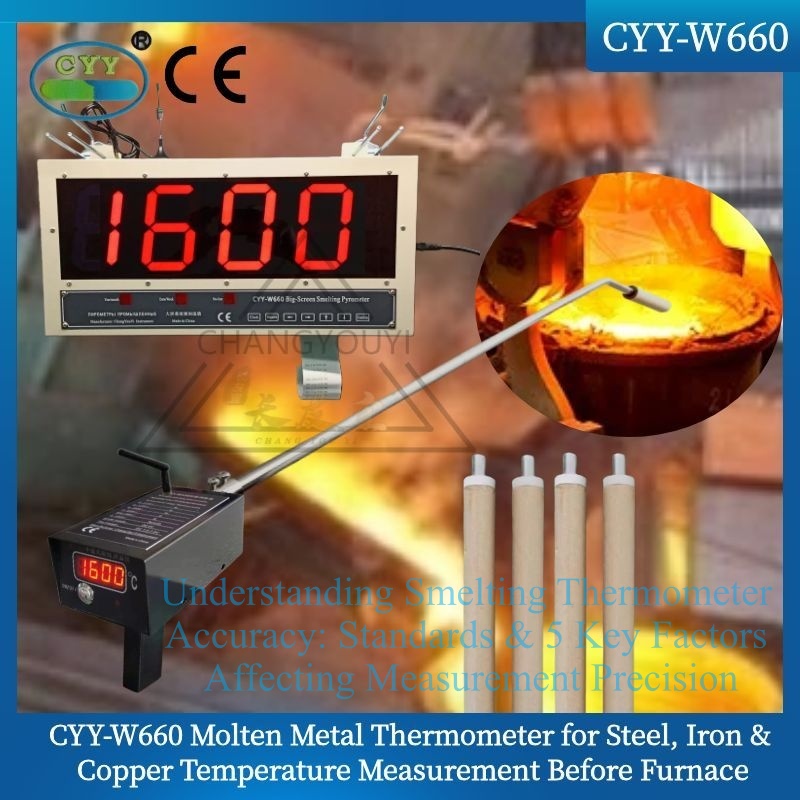
Understanding Smelting Thermometer Accuracy: Standards & 5 Key Factors Affecting Measurement Precision
Introduction
In high-temperature melting production sites across metallurgy and casting, temperature is the core process parameter that determines product quality, energy consumption, and production efficiency. A single inaccurate temperature measurement can cause molten metal composition deviation, casting defects, and even partial batch scrapping — resulting in direct economic loss. As the "eyes" of furnace-front operators, the measurement accuracy of a furnace-front thermometer directly reflects an enterprise's quality control level and production cost performance.
This article provides an in-depth analysis of how industrial thermometer accuracy is defined, which standards apply, and the key factors that influence it — offering practical reference for equipment selection, use, and maintenance.
1. Accuracy Definition and Industry Standards: More Than Just a Number
In technical terms, accuracy is a comprehensive evaluation metric that reflects how close an instrument's measured value is to the true value. For molten steel thermometers and molten iron temperature measurement devices, accuracy cannot be fully summarized by a simple "±X °C" figure. It typically comprises several layers:
Basic error — the measurement error of the instrument itself (excluding the fast-response thermocouple sensor probe) under standard conditions
System error — fixed-direction deviation introduced by the complete measurement system (thermometer, compensation cables, thermocouple, and probe)
Repeatability — the consistency of multiple measurement results for the same object under identical conditions
Stability — the instrument's ability to maintain its performance parameters over time
A qualified furnace-front testing instrument should state its accuracy clearly — for example, "≤ ±0.2% ±1 °C", meaning the reading error stays within ±0.2% of the true value plus an additional fixed error of ±1 °C. When selecting equipment, users should focus on the applicable standards and the complete accuracy statement, rather than a single number.
2. Five Key Factors Affecting Temperature Measurement Accuracy
Beyond understanding accuracy standards, it is essential to examine which factors silently "steal" measurement precision in real, complex production environments.
2.1 Quality and Condition of the Fast-Response Thermocouple Probe
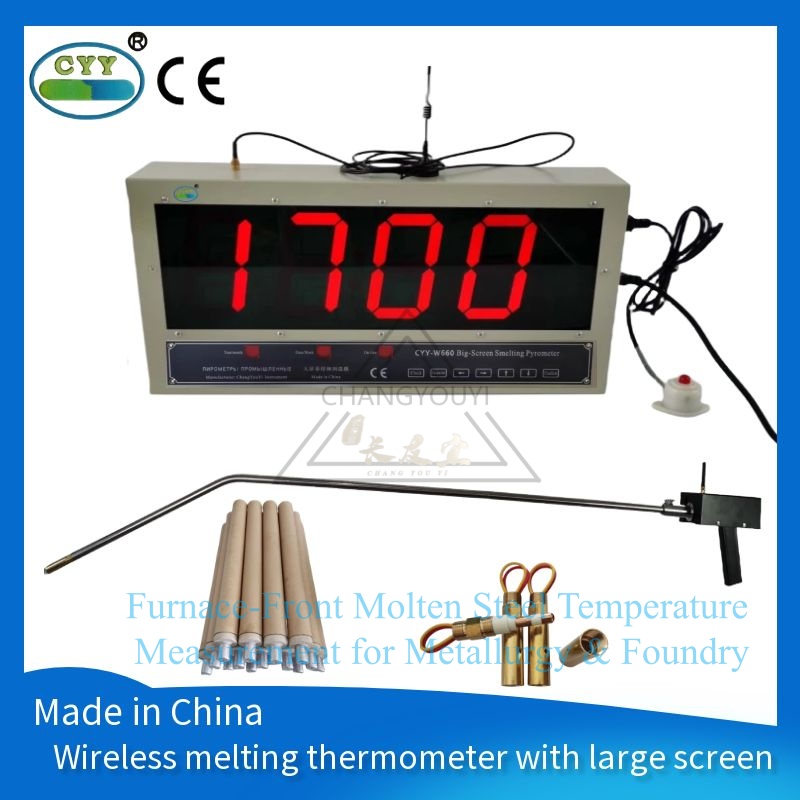
This is both the most critical and the most vulnerable link in the entire measurement chain. The material purity of the fast thermocouple, the welding quality of the thermocouple wires, and whether the protective tube has been infiltrated by molten metal all directly affect the accuracy of the thermoelectric signal. Using non-original, low-cost, or damaged thermocouple probes will inevitably produce inaccurate results — no matter how high the main unit's precision.
Thermocouple Types and Measuring Ranges
| Thermocouple Type | Model | Measuring Range (°C) | Applicable Occasion |
|---|---|---|---|
| Single platinum-rhodium | S | 0–1750 | Steel, iron, copper melts |
| Single platinum-rhodium | HR/OR | 0–1750 | Steel, iron, copper melts |
| Double platinum-rhodium | B | 500–1800 | High-temperature molten steel |
| Tungsten-rhenium | W | 0–2000 | Steel, molten iron |
2.2 Anti-Interference Capability of the Instrument
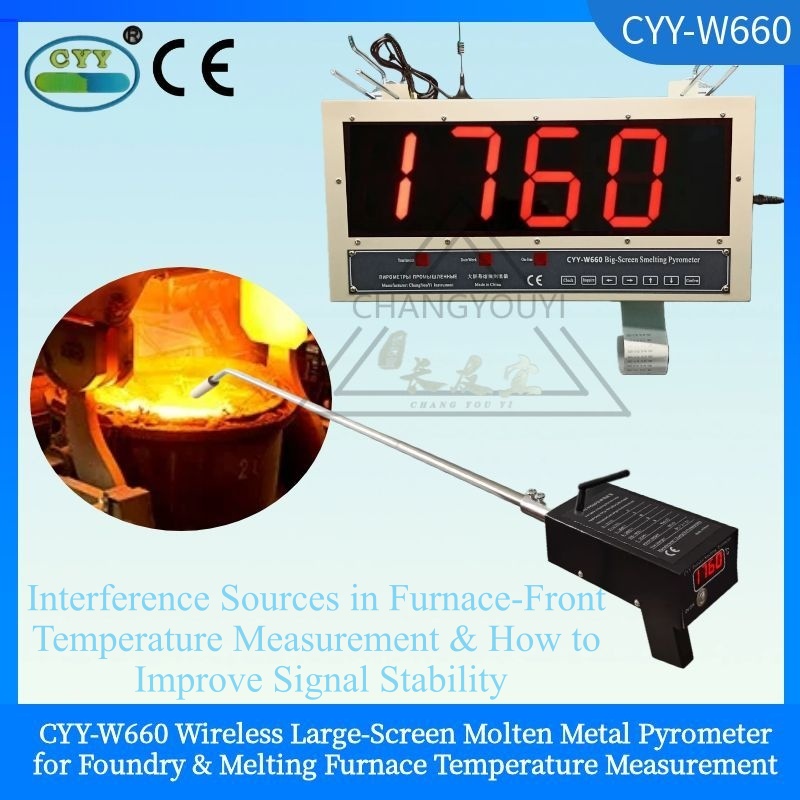
Foundry workshop environments are harsh — particularly when induction furnaces are running and generating strong electromagnetic interference. A smelting thermometer with poor anti-interference capability will produce jumping, drifting, or even failed readings. Quality equipment applies multiple shielding techniques, digital filtering algorithms, and premium wireless transmission modules (for wireless temperature measurement systems) to ensure signal stability. Professional instruments are designed to operate stably even while the induction furnace remains energized.
2.3 Accuracy of Cold-Junction Compensation
A thermocouple measures the temperature difference between its hot end and its cold end (at the instrument's terminal block). Fluctuations in cold-end (ambient) temperature must be compensated in real time and with precision — otherwise, error is introduced. High-performance thermometers contain built-in high-precision cold-junction compensation sensors and algorithms that effectively eliminate this influence.
2.4 Sampling Rate and Signal Processing
Molten metal temperature measurement is a transient process that demands rapid signal response and sampling capability. A slow response will miss the true temperature peak. Advanced signal processing technology effectively filters noise and captures the genuine temperature signal.
2.5 Operating Standards and Calibration
Even the most precise equipment depends on disciplined operation — including thermocouple insertion depth and angle, dwell time in the molten metal, and periodic instrument calibration. Ignoring operating procedures and scheduled calibration makes accuracy unattainable.
3. Technology Evolution: From Wired to Wireless, From Single Point to System
To meet these challenges, furnace-front thermometer technology continues to advance. Traditional portable legacy instruments are gradually being supplemented by higher-integration systems with more convenient data management.
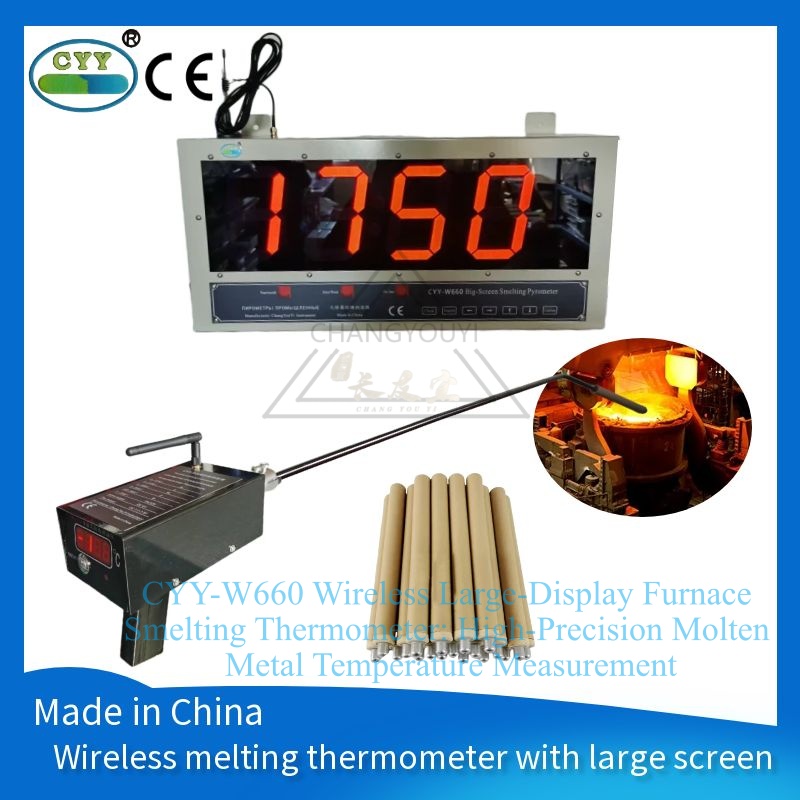
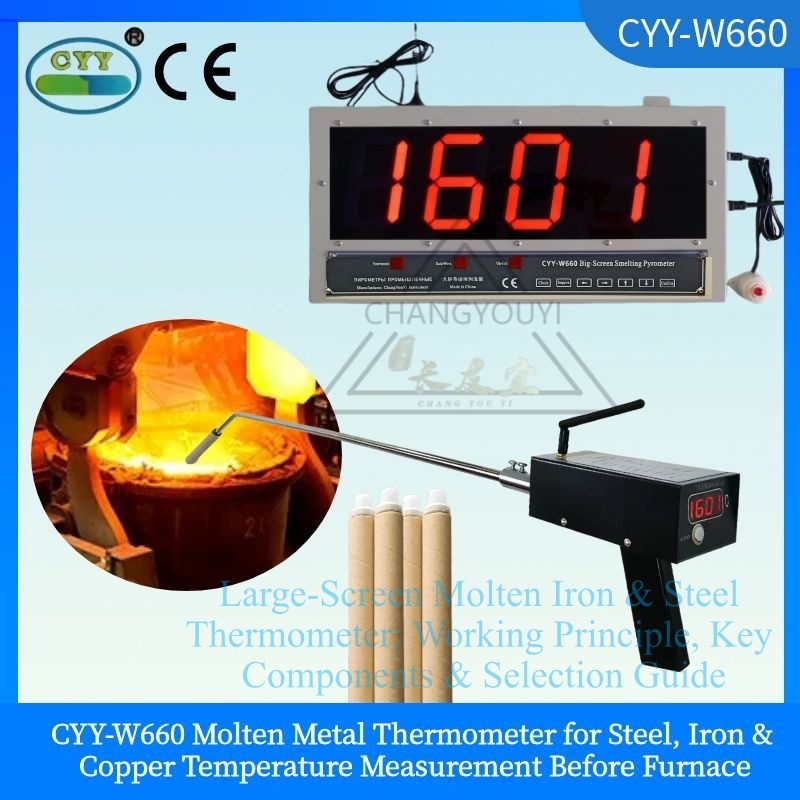
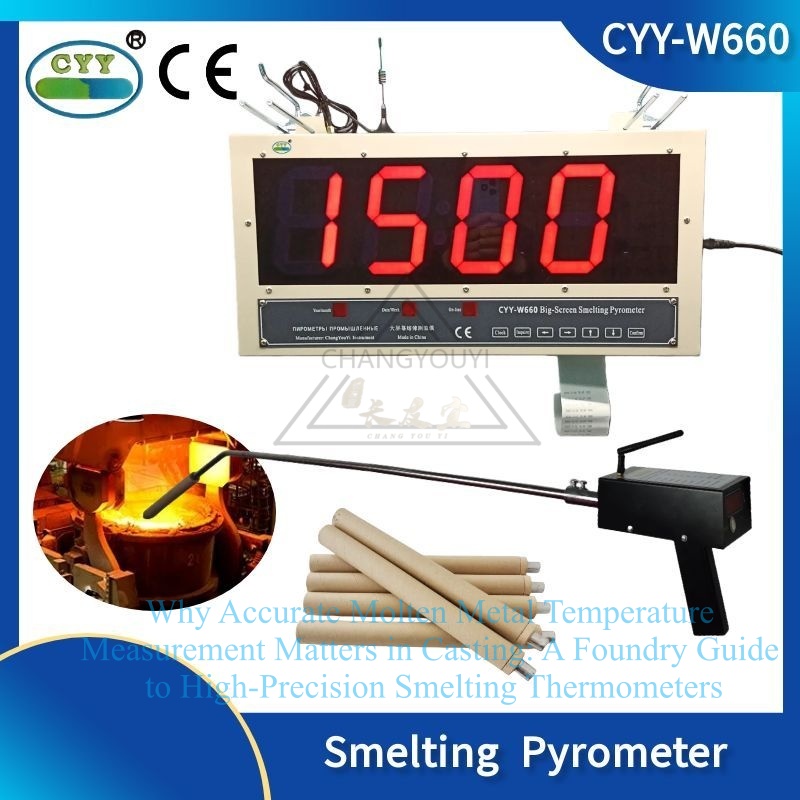
The CYY-W660 wireless furnace-front thermometer from CYY (Nanjing Changyouyi Analytical Instruments Co., Ltd.) illustrates this current technical approach:
Wireless — wireless transmission technology synchronizes measurement data in real time to a remote large screen, eliminating on-site cable hazards and constraints while improving operational flexibility, particularly for multi-operator monitoring stations
Systemized — combines portable measurement with centralized monitoring: the handheld unit delivers precise measurement while the large screen provides long-distance, multi-person visibility, with data storage and query functions that support furnace-front analysis and quality traceability
Intelligent — integrates audible and visual alarms for broken thermocouple, over-temperature, and low battery, and digitizes measurement data into storage — supporting the construction of a production quality database for process optimization
At the same time, for rapid control of molten iron composition, carbon-silicon analyzers (thermal analyzers) are used alongside thermometers. By measuring cooling curves, they rapidly determine carbon and silicon content — achieving coordinated control of temperature and composition, and forming a complete rapid furnace-front testing solution for the casting industry.
4. Application Scenarios & Value Summary
In steel enterprises, high-precision molten steel thermometers are key to controlling superheat in continuous casting and refining, ensuring slab quality
In foundries, precise molten iron temperature measurement combined with carbon-silicon analysis is the core of maintaining iron grades, improving casting yield, and reducing scrap and rework
In non-ferrous metal smelting, stable temperature measurement effectively prevents alloy burn loss and energy waste
Summary and Recommendations
View accuracy rationally — treat it as a system performance determined jointly by instrument, sensor, operation, and environment; focus on the product's overall technical solution and anti-interference design
Choose a reliable partner — prioritize suppliers with mature industry experience, complete after-sales support, and technical service capability (such as Nanjing Changyouyi Analytical Instruments Co., Ltd.). Stable equipment performance and timely consumables supply (quality thermocouples, analysis cups) are the guarantee of long-term measurement accuracy
Prioritize data management — choose equipment with data storage and output capability, converting scattered temperature readings into analyzable, traceable production quality information that lays the foundation for digital management
Standardize operations strictly — establish and enforce standard temperature measurement procedures and regular calibration systems as the basis for realizing equipment accuracy
Furnace-front temperature measurement measures more than metal temperature — it measures the baseline of an enterprise's quality control and its level of cost management. In today's pursuit of efficient, lean production, choosing a stable, accurate, and reliable temperature measurement system is an investment with lasting value.
About Us
Nanjing Changyouyi Analytical Instruments Co., Ltd. (CYY) has long focused on the research, development, and production of melting process testing equipment for the metallurgy and foundry sectors — providing customers with complete solutions ranging from smelting thermometers and thermal analyzers to supporting consumables. We emphasize the long-term stability and practicality of our products, and welcome technical exchange with industry colleagues to explore effective ways to improve furnace-front quality control.